
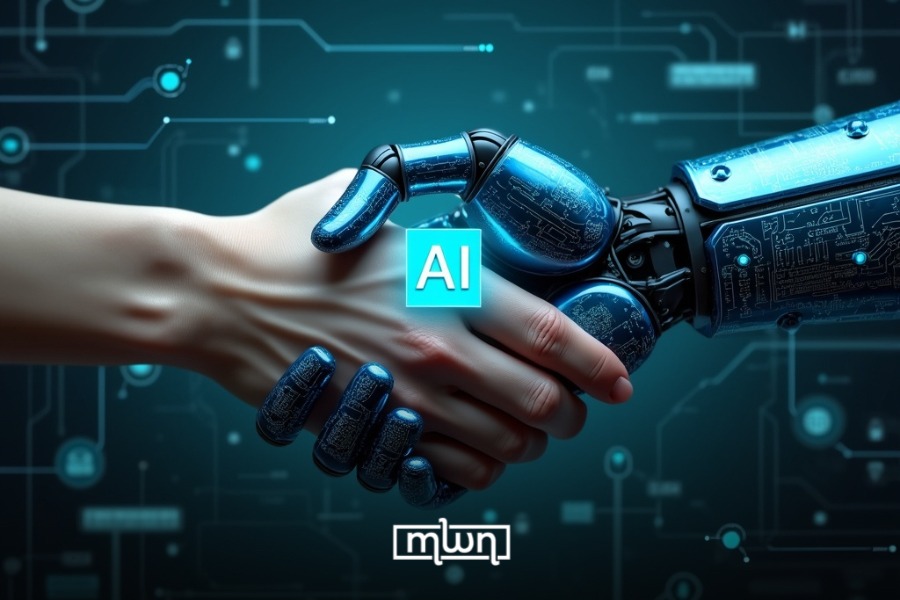
As we approach 2026, the landscape of artificial intelligence (AI) continues to evolve at an unprecedented pace, positioning itself as a pivotal force in transforming productivity across various sectors. The integration of AI technologies into everyday workflows is no longer a futuristic concept but a present-day reality that promises to redefine how individuals and organizations operate. By 2026, AI is expected to be deeply embedded in both professional and personal environments, acting as a game changer for productivity.
One of the most significant impacts of AI on productivity lies in its ability to automate routine and repetitive tasks. Machine learning algorithms and intelligent automation tools can handle data entry, scheduling, customer support, and even complex decision-making processes with remarkable speed and accuracy. This shift allows human workers to focus more on creative problem-solving, strategic planning, and interpersonal interactions-areas where human intuition remains essential. Consequently, businesses can achieve higher output levels without proportionally increasing labor costs or time investment.
Moreover, advancements in natural language processing (NLP) are making communication between humans and machines more seamless than ever before. Virtual assistants powered by sophisticated NLP models will become indispensable collaborators by 2026. These assistants will not only manage calendars or send emails but also generate click here reports, summarize lengthy documents, translate languages instantly, and provide real-time insights during meetings. Such capabilities reduce cognitive load on employees while enhancing decision-making speed.
Another critical factor contributing to enhanced productivity through AI is personalized learning and skill development platforms tailored to individual needs. Adaptive learning systems analyze user behavior patterns to deliver customized training materials that accelerate knowledge acquisition efficiently. This personalization ensures continuous workforce upskilling aligned with evolving industry demands-a necessity in today’s fast-changing job market.
In addition to workplace applications, AI-driven analytics will empower companies with predictive insights that inform resource allocation and operational strategies more effectively than traditional methods ever could. By analyzing vast datasets rapidly-far beyond human capacity-AI models identify trends and potential risks early on allowing proactive interventions instead of reactive responses.
However, it is essential to acknowledge challenges accompanying this transformation such as ethical concerns around privacy; algorithmic biases; displacement fears among workers; and the need for robust regulatory frameworks ensuring responsible use of AI technologies.
and beyond.
and sustained competitive advantage in an increasingly digital world where adaptability reigns supreme.
and data-driven decision-making support systems-all converging towards reshaping how work gets done by 2026.