In the digital age, proxies have become essential tools for maintaining privacy, enhancing security, and accessing restricted content. Among the various types of proxies available, premium residential proxies and datacenter proxies are two popular options that cater to different needs. Understanding their differences is crucial in determining which one is better suited for specific use cases.
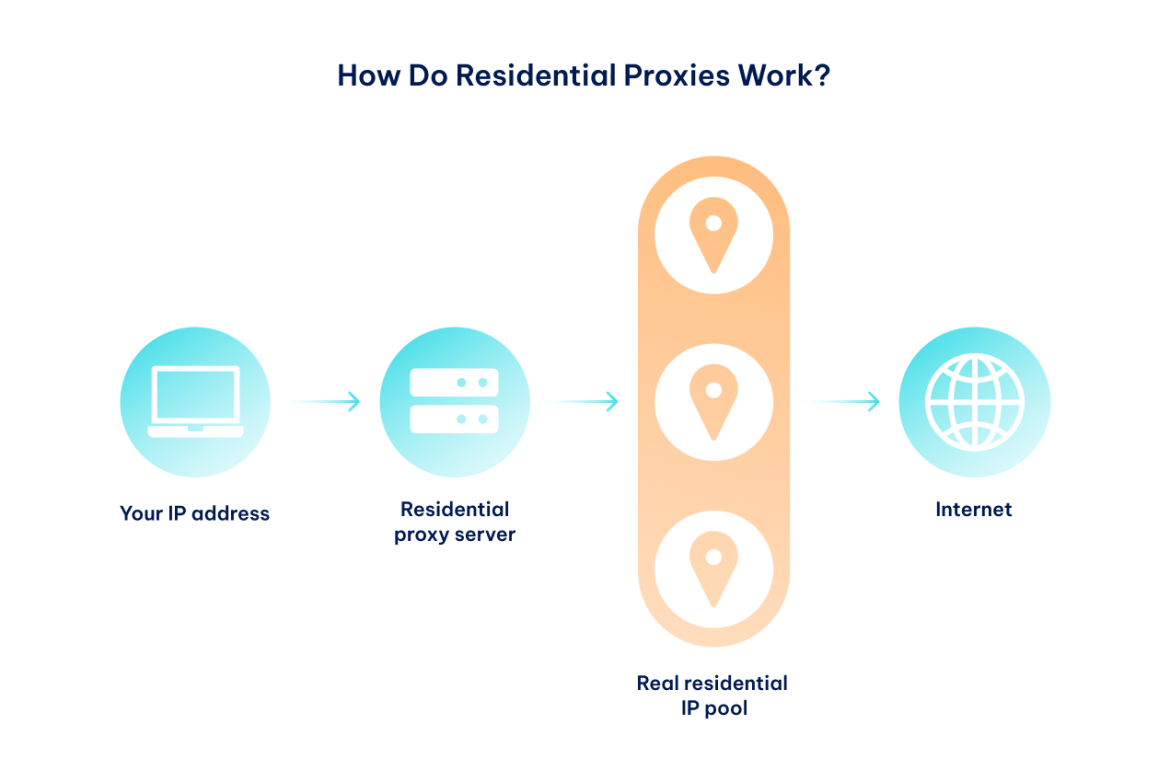
Premium residential proxies route internet traffic through real residential IP addresses assigned by Internet Service Providers (ISPs). These IPs originate from actual devices located in homes around the world, making them appear as legitimate users to websites and online services. This authenticity significantly reduces the chances of being detected or blocked by anti-bot measures. Residential proxies are particularly effective for activities such as web scraping, sneaker copping, ad verification, and managing multiple social media accounts where high anonymity and reliability are paramount.
On the other hand, datacenter proxies operate from data centers rather than physical residences. These IP addresses are generated within large-scale server farms owned by cloud providers or hosting companies. Datacenter proxies offer faster speeds due to their proximity to major internet backbones and robust infrastructure but lack the inherent legitimacy of residential IPs since they do not correspond to actual household connections. Consequently, some websites may flag or block datacenter proxy traffic more readily if they detect suspicious patterns.
When comparing premium residential proxies with datacenter proxies on performance metrics like speed and latency, datacenter options generally have an edge due to optimized network routes and higher bandwidth availability. However, this advantage can be offset if frequent blocks occur because of their less authentic nature. Conversely, while premium residential proxies might experience slightly slower response times owing to diverse geographic locations and ISP routing complexities, they excel in evading detection thanks to genuine user-originated IP addresses.
Cost is another important factor influencing choice between these Premium Residential proxy proxies tend to be more expensive given their scarcity and higher demand for legitimate IPs worldwide. Datacenter proxies usually come at a lower price point with scalable packages suitable for businesses requiring large volumes of requests without stringent anonymity demands.
Ultimately, deciding which proxy type is better depends largely on intended usage scenarios. For tasks demanding stealthiness-such as bypassing geo-restrictions on streaming platforms or conducting sensitive market research-premium residential proxies provide superior reliability despite higher costs. In contrast, when speed is critical but occasional blocking can be tolerated-like bulk data extraction from non-restrictive sites-datacenter proxies present a cost-effective solution.
In conclusion, both premium residential and datacenter proxies have distinct advantages tailored toward different priorities: authenticity versus speed; cost versus reliability; stealth versus volume capacity. By evaluating specific requirements carefully-including budget constraints and target websites’ sensitivity-it becomes possible to select the most appropriate proxy service that balances performance with effectiveness in achieving desired outcomes online.